

Cream kitchen cabinets are having a big moment in . And honestly, it makes complete sense. They are warmer than white but still feel light and fresh. They work in small apartments, large farmhouses, and everything in between. If you are thinking about updating your kitchen, cream is one color worth taking seriously.
But choosing the right shade, pairing it with the right materials, and keeping it looking great over time that takes a little know-how. This guide covers everything you need. You will find design inspiration across three popular styles, a honest comparison between cream and white, real kitchen projects from across the country, and simple maintenance tips that actually work. Whether you are starting from scratch or just refreshing what you have, this guide will help you make the right call.
What Are Cream Kitchen Cabinets?
Cream kitchen cabinets sit on the color spectrum between bright white and warm beige. They carry soft undertones sometimes ivory, sometimes buttermilk, sometimes a hint of greige that give them a depth and character that pure white simply can’t match.
Unlike white, which tends to feel flat or clinical under certain lighting, cream reflects warmth. It softens sharp architectural lines and creates a sense of comfort that resonates whether you’re preparing a weekday dinner or hosting guests. Common cream shades include:
- Soft Ivory the cleanest cream tone, ideal for compact spaces
- Buttermilk rich and cozy, a natural fit for farmhouse-style kitchens
- Alabaster Cream a modern favorite that bridges traditional and contemporary design
- Antique Cream warmer and slightly golden, perfect for heritage-inspired interiors
- Greige-Cream a contemporary blend of grey and cream for transitional builds
The undertone you choose can dramatically affect how the cabinets look in your kitchen, especially under different lighting conditions. Always test paint samples at home before committing what looks perfect in a showroom may read too yellow or too cool under your kitchen’s specific light.
Also read : 25 Red Bathroom Ideas That Feel Bold, Stylish, and Perfectly Balanced
Why Homeowners Choose Cream Cabinets Over White?
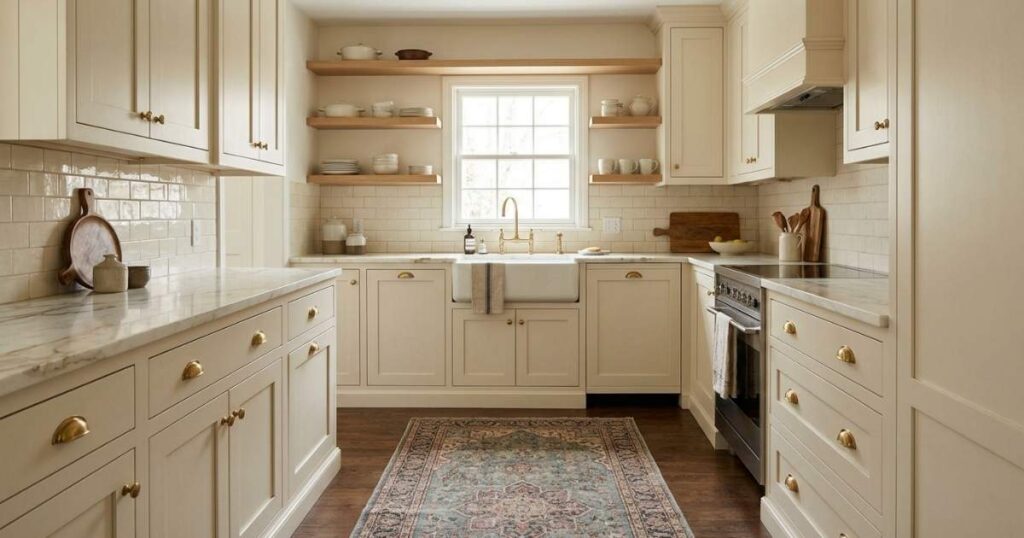
Cabinets are the single largest visual element in any kitchen. They set the tone for everything else countertops, flooring, fixtures, and even appliances. Get the color wrong, and the whole room can feel off. Get it right, and even a modest kitchen renovation can feel like a complete transformation.
So why are so many homeowners in choosing cream over white? A few compelling reasons:
Warmth without sacrifice. White kitchens can feel cold or sterile, especially in north-facing rooms or spaces without abundant natural light. Cream adds warmth without darkening the space.
Better at hiding everyday wear. Busy families know the struggle fingerprints, grease splashes, and light scuffs show up mercilessly on bright white surfaces. Cream’s slightly deeper tone is far more forgiving between cleans.
Timeless, not trendy. In , homeowners are prioritizing longevity over trend-chasing. Cream delivers a classic, enduring backdrop that won’t feel dated in five years the way a bold statement color might.
Resale-friendly. Real estate professionals consistently note that warm-neutral kitchens appeal to the broadest range of buyers. Cream colored kitchen cabinets strike that balance between personality and broad market appeal.
Pairs with more materials. Cream is a natural partner for warm woods, brass hardware, stone countertops, and earthy tiles materials that are leading kitchen design in .
Popular Design Inspiration for Cream Kitchen Cabinets
Modern Cream Kitchen Cabinets
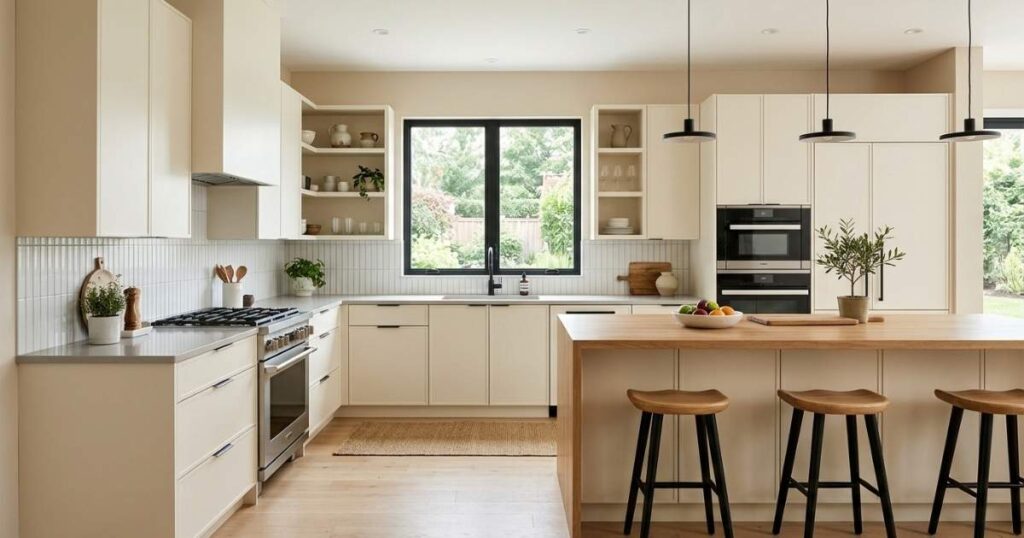
Modern doesn’t have to mean cold. Flat-panel or simple shaker-style cream cabinets, paired with sleek quartz countertops and minimal hardware, deliver a contemporary look that still feels human and livable. Matte black handles provide bold contrast, while under-cabinet LED lighting highlights the cream’s subtle warmth. Stainless steel appliances tie the space together without competing with the cabinetry.
For a more elevated modern take, consider fluted cabinet details or recessed hardware these textural touches add interest while keeping the overall look streamlined and current.
Traditional & Farmhouse Cream Kitchen Cabinets
This is where cream truly shines. Shaker-style doors in a soft cream tone, paired with an apron-front sink, butcher block countertops, and oil-rubbed bronze or matte black hardware, create the quintessential farmhouse kitchen. Add exposed wood beams, open shelving, and vintage pendant lights, and you have a space that feels genuinely warm and lived-in.
Antique cream kitchen cabinets work especially well in this context. Their slightly golden undertone complements natural oak flooring and brings out the grain in wood accents throughout the room.
Luxury Antique Cream Kitchen Cabinets
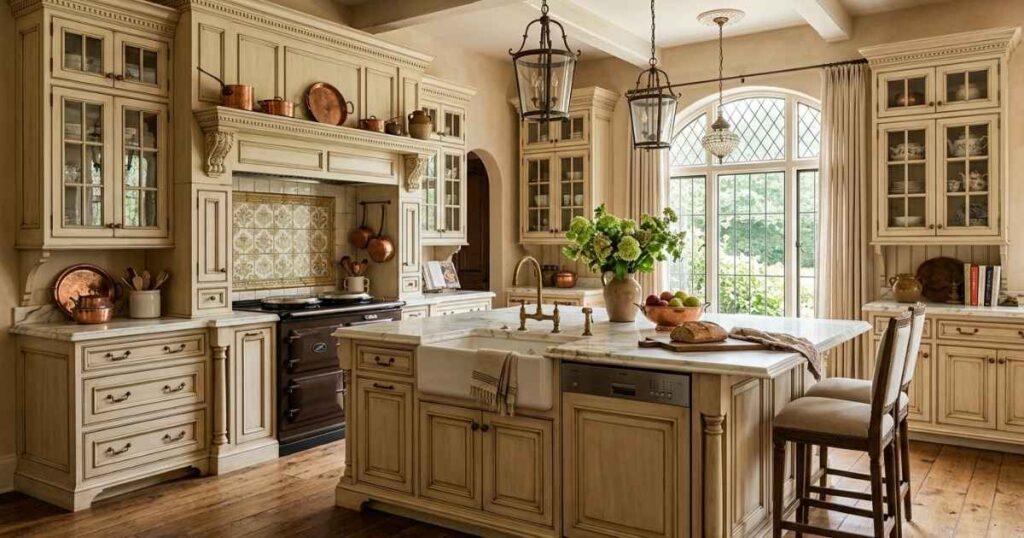
Cream translates beautifully into high-end design when paired with the right materials. Raised-panel cabinet doors in antique cream, combined with brushed gold or polished brass hardware, marble countertops, and a decorative mosaic backsplash, create a kitchen that feels genuinely luxurious. Add statement pendant lighting and soft, layered under-cabinet illumination, and you have a space that feels like it belongs in an upscale villa rather than a standard renovation.
The key to making luxury cream work is restraint let the richness of the materials speak rather than overloading the space with competing details.
Best Design Ideas for Cream Colored Kitchen Cabinets
Cream’s greatest strength is its versatility. It works with a wide range of materials, tones, and finishes. Here’s how to build a cohesive design around cream cabinets:
Countertops:
- White quartz clean, minimal, and timeless
- Veined marble adds luxury and organic movement
- Warm granite earthy and grounding
- Butcher block casual warmth, ideal for farmhouse kitchens
- Dark soapstone dramatic contrast for a bold look
Flooring:
- Light oak keeps the space bright and airy
- Dark walnut creates rich contrast without feeling heavy
- Neutral ceramic tile balanced and classic, suits any style
- Terracotta warm and characterful, especially for Mediterranean-inspired kitchens
Walls & Backsplash:
- Soft sage green walls fresh and calming, one of ‘s top pairings
- Navy or deep teal accents bold contrast that feels intentional and sophisticated
- Subway tile classic and understated
- Handmade ceramic tiles textured and artisanal
- Marble slab backsplash seamless and luxurious
Hardware & Fixtures:
- Brushed gold warm, timeless, and currently one of the most popular choices
- Matte black bold, modern, and high-contrast
- Antique brass heritage-inspired, ideal for traditional kitchens
- Stainless steel sleek, modern, and endlessly versatile
Lighting:
- Warm bulbs (2700K–3000K) enhance cream’s softness
- Pendant lights above islands add focal-point drama
- Under-cabinet LEDs highlight the cabinet finish and improve workspace clarity
Different Shades: Cream Kitchen Cabinets vs. White Cabinets
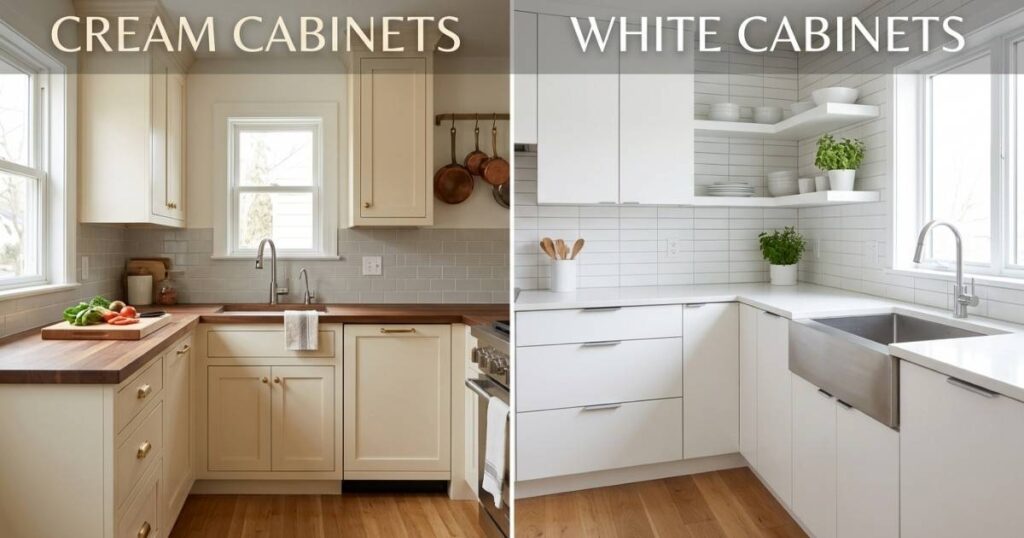
Choosing between cream and white often comes down to the atmosphere you want to create. Here’s a direct comparison to help you decide:
| Feature | Cream Kitchen Cabinets | White Kitchen Cabinets |
| Overall Mood | Warm, inviting, cozy | Crisp, clean, precise |
| Best Pairings | Wood tones, brass, earthy hues, warm stone | Cool metals, stainless steel, bold accents |
| Light Reflection | Soft, diffused warmth | Bright, maximizes perceived space |
| Wear Visibility | Hides fingerprints and minor smudges well | Shows every mark and stain clearly |
| Maintenance | Lower daily upkeep; risk of yellowing over time | Easy to clean; requires frequent wiping to stay crisp |
| Trend Fit | Leading choice for warm-neutral, timeless spaces | Evolving toward cream-white and off-white hybrids |
| Resale Appeal | Broad, especially with warm-toned floors | Universal, but increasingly seen as standard |
| Risk | Can yellow if not properly maintained or ventilated | Can feel cold or sterile without careful styling |
Bottom line: If your kitchen has warm-toned floors, natural wood elements, or gold/brass fixtures already in place, cream is almost certainly the more cohesive choice. If you’re working with a high-contrast, minimalist design scheme with cool materials, white may serve you better.
Not Sure Which One to Choose? Click Here to Ask Our Designers for Recommendations!
Every kitchen is different. Lighting, layout, existing finishes, and personal preference all influence which direction is right for you. Our design team can review your space and give tailored recommendations no guesswork required.
Real-Life Cases: Cream Kitchen Cabinets in Dream Homes
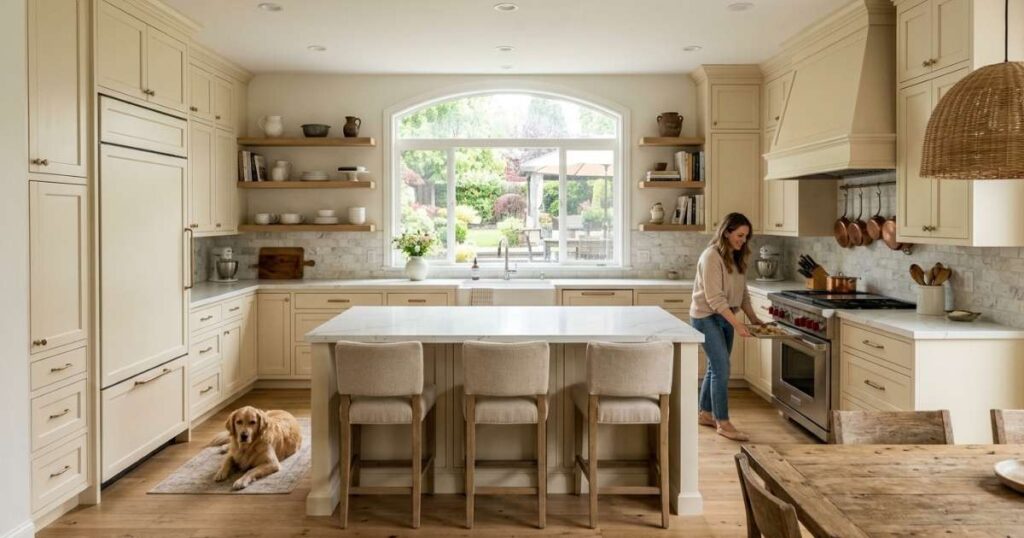
Real projects are the best proof of concept. Here’s how cream kitchen cabinets have transformed spaces across the country:
Modern Apartment in New York
A Manhattan homeowner wanted a kitchen that felt contemporary but not cold a common challenge in urban apartments with limited natural light. The solution: glossy flat-panel cream cabinets paired with white quartz countertops and matte black hardware. Open shelving replaced upper cabinets on one wall, keeping the space visually light. The cream tone prevented the kitchen from feeling like a sterile box while the sleek finishes maintained a modern edge.
Farmhouse Kitchen in Texas
An Austin family was stuck with dark, outdated cabinets that made their large kitchen feel heavy and closed-in. Replacing them with shaker-style farmhouse cream cabinets paired with butcher block countertops, open wood shelving, and unlacquered brass fixtures completely transformed the space. The kitchen now feels warm, inviting, and full of character without veering into a cliché rustic aesthetic.
Antique Villa in Florida
An older Florida property needed a kitchen that honored the home’s heritage while offering modern functionality. Antique cream kitchen cabinets with detailed molding, raised-panel doors, and polished brass hardware were the natural choice. Paired with marble countertops and a handpainted tile backsplash, the kitchen now feels like an elegant extension of the home’s original character.
Luxury Villa in Los Angeles
A Beverly Hills renovation called for a kitchen that felt high-end without being ostentatious. Cream cabinets with brushed gold hardware, a Calacatta marble backsplash, and soft layered lighting delivered exactly that. The cream tone kept the space from feeling heavy despite the use of rich materials, resulting in a kitchen that is genuinely luxurious and endlessly livable.
Coastal Retreat in California
A Malibu vacation home needed a kitchen that felt light, breezy, and effortlessly coastal. Cream colored kitchen cabinets paired with light oak flooring, a pale blue zellige tile backsplash, and natural rattan stools achieved exactly the right atmosphere. The cream base ties all the natural and coastal elements together without overwhelming the serene vibe.
Boutique Café in Chicago
A café owner renovating the kitchen-adjacent prep area wanted a space that felt warm and welcoming to staff and visible to guests. Cream kitchen furniture combined with natural wood shelves, handmade ceramic mugs on open display, and Edison pendant lighting created a space that feels artisanal and approachable exactly the brand identity the owner was aiming for.
Maintenance Tips for Cream Colored Kitchen Cabinets
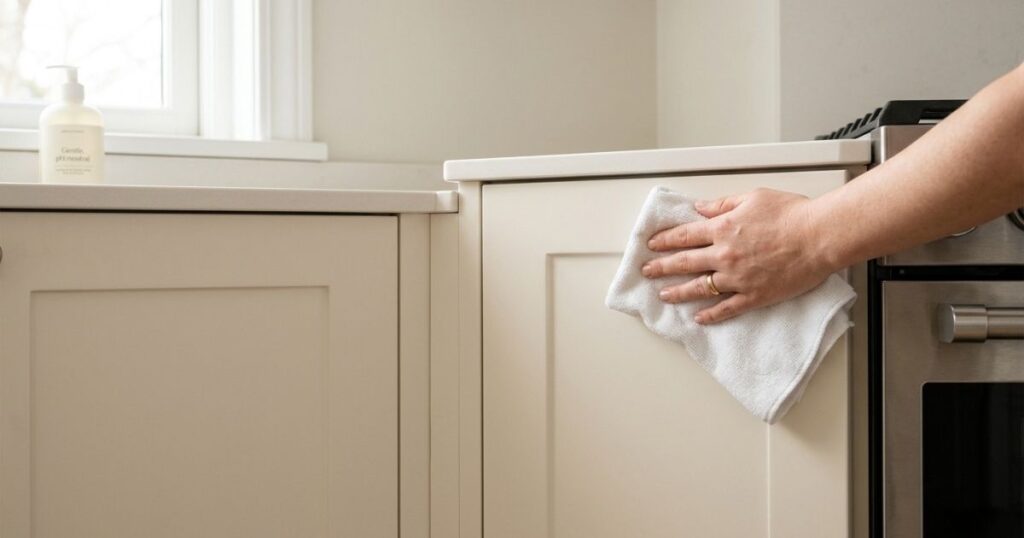
Cream cabinets are more forgiving than white in day-to-day use, but they still need consistent care to stay looking their best. Here’s a simple routine that works:
- Daily wipe-down Use a soft microfiber cloth with warm water and a small amount of mild dish soap. This removes fingerprints, grease, and light splatters before they build up.
- Avoid harsh chemicals Bleach, ammonia-based sprays, and abrasive scrubbing pads can strip the finish and cause uneven discoloration. Stick to gentle, pH-neutral cleaners.
- Monthly deep clean A solution of equal parts white vinegar and water, applied with a soft cloth, keeps cabinets fresh and removes grease buildup without damaging the paint or finish.
- Prevent yellowing This is the biggest concern with cream cabinets. Install a quality range hood that vents grease and steam away from the cabinet surfaces. In sun-drenched kitchens, UV-resistant paint finishes or window treatments can help preserve the color over time.
- Handle with care Where possible, use pulls or bar handles rather than pushing doors open with your hands directly. This reduces the concentration of oils and grime on high-contact areas.
- Touch up promptly Keep a small amount of touch-up paint in your original color. Addressing small chips or scuffs early prevents them from discoloring further and becoming harder to blend.
With the right habits in place, cream kitchen cabinets can look as fresh in year ten as they did on installation day.
Conclusion
Cream kitchen cabinets are one of those rare design choices that never really go out of style. They bring warmth to spaces that white can’t, hide everyday wear better than most light colors, and pair naturally with wood, stone, brass, and tile. Whether your kitchen leans modern, farmhouse, or luxury, cream fits in without feeling forced. It gives you a clean, bright space that still feels like a home not a showroom.
If you’re planning a renovation, cream is worth serious consideration as your foundation color. Start by testing a few shades in your actual kitchen lighting, then build your countertops, flooring, and hardware around the tone you love. Done right, cream cabinets don’t just update your kitchen they make it feel like it was always meant to look that way.

