

Gray kitchen cabinets have become one of the most sought-after choices in modern home design and for good reason. They’re sophisticated, timeless, and remarkably flexible. But that same flexibility can make one question surprisingly difficult: what wall color actually goes best with gray kitchen cabinets?
The truth is, the answer depends on your cabinet’s undertone, your kitchen’s natural light, and the mood you want to create. Whether you’re after a bright and airy feel, a cozy farmhouse vibe, or a bold, high-contrast look, there’s a wall color that perfectly complements gray cabinetry. This guide breaks it all down so you can make a confident, designer-worthy decision.
Best Wall Colors for Gray Kitchen Cabinets
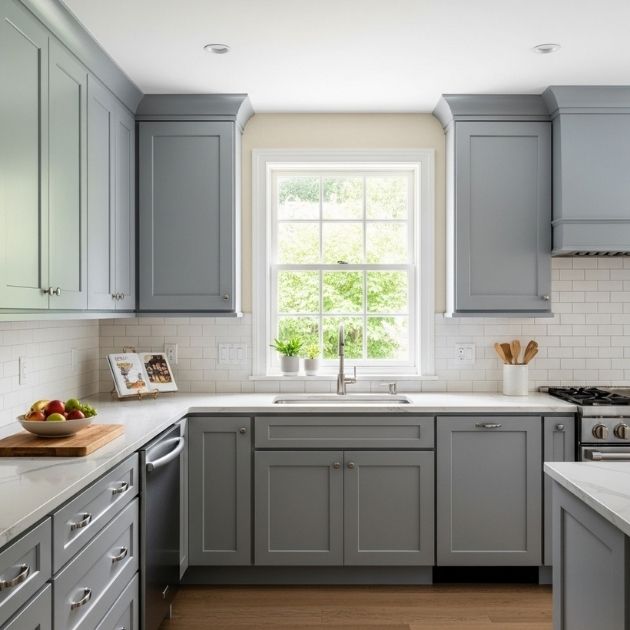
Before diving into specific colors, here’s a quick reference guide to the most popular pairings:
| Wall Color | Best For | Cabinet Shade That Works Best |
| Crisp White | Modern, minimalist, bright spaces | Light, medium, or dark gray |
| Cream / Warm White | Cozy, traditional, earthy kitchens | Warm gray (greige, taupe-gray) |
| Navy Blue | Bold, dramatic, classic-modern look | Light to medium gray |
| Light Gray | Monochromatic, serene, Scandinavian | Any shade of gray |
| Black | Industrial, high-contrast, contemporary | Light or medium gray |
| Muted Red / Terracotta | Farmhouse, rustic, personality-driven | Cool or warm gray |
White Walls with Gray Kitchen Cabinets
If there’s one wall color that never fails with gray cabinets, it’s white. Crisp white walls create a clean, high-contrast backdrop that lets your cabinetry take center stage. The pairing feels timeless, bright, and effortlessly modern making it the top choice for kitchens with limited natural light or smaller footprints.
That said, not all whites are the same. Warm whites like Benjamin Moore’s “Simply White” soften the overall look and work especially well with greige or taupe-gray cabinets. Cool whites like Sherwin-Williams’ “Extra White” bring a more sleek, contemporary edge that pairs beautifully with blue-toned or charcoal gray cabinets.
Why it works: White maximizes light reflection, making the kitchen feel larger and more open. It also provides a neutral backdrop that adapts easily as you update hardware, countertops, or décor over time.
Pro tip: Pair white walls with gray cabinets and a white subway tile backsplash for a clean, cohesive kitchen that photographs beautifully.
Related Post: 23 Stunning Teal Bathroom Ideas That Feel Fresh and Timeless
Cream Walls with Gray Cabinets
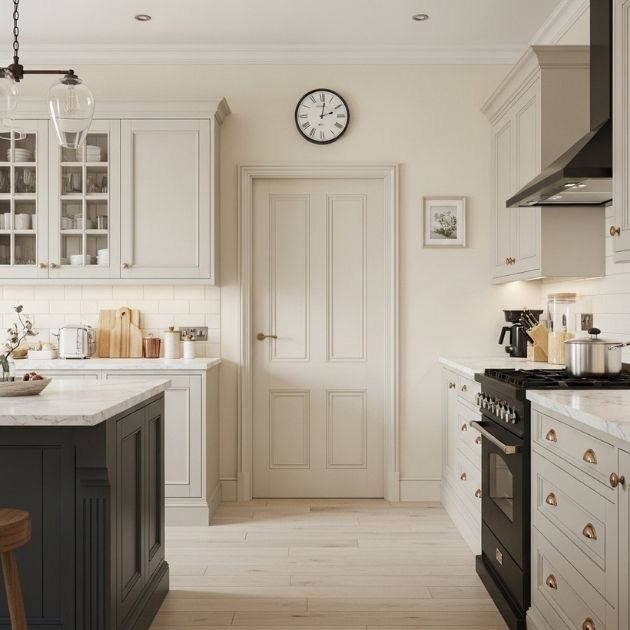
For homeowners who find stark white a little too clinical, cream is the answer. Cream walls bring warmth and depth without overpowering the room, and they draw out the brown or golden undertones present in many warm-toned gray cabinets.
This pairing works exceptionally well when the kitchen features brass or gold hardware, butcher block countertops, or hardwood flooring. The soft, earthy palette creates an inviting, lived-in atmosphere that still feels polished.
Best for: Transitional kitchens, homes with warm wood tones, or spaces where you want elegance without starkness.
Color to try: Benjamin Moore “White Dove” or Sherwin-Williams “Alabaster.”
Navy Blue Walls with Gray Kitchen Cabinets
Want to make a statement? Navy blue walls paired with light or medium gray cabinets deliver a rich, dramatic contrast that feels both classic and thoroughly modern. This combination draws from traditional design while feeling fresh and current think New England coastal meets contemporary kitchen.
The key to pulling this off is balance. Since both navy and gray are cool tones, you’ll want to introduce warmth through gold or brass hardware, warm-toned wood accents, and layered lighting. This combination truly shines in larger kitchens with good natural light.
What to avoid: Pairing navy walls with dark charcoal gray cabinets the space can feel too heavy without enough contrast.
Best accent finishes: Brushed brass pulls, warm wood open shelving, or a marble countertop with warm veining.
Light Gray or Dark Gray Walls
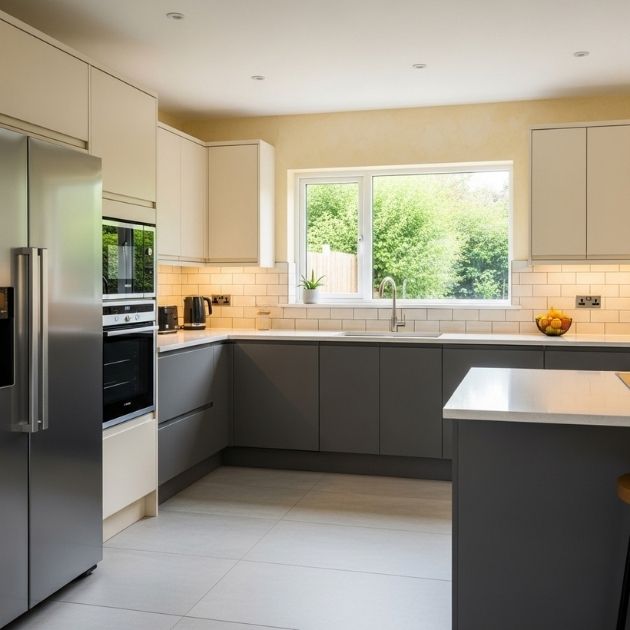
Going monochromatic with your kitchen? A gray-on-gray scheme can feel serene and sophisticated when done right. The secret is contrast through shade variation your walls should be either noticeably lighter or slightly deeper than your cabinet color.
Light gray walls work best in smaller kitchens where you want to maintain brightness while creating a cohesive, flowing aesthetic. A soft dove gray wall alongside medium gray shaker cabinets creates a calm, unified space that feels anything but flat especially when you add texture through a tile backsplash or mixed-finish hardware.
Medium or slightly deeper gray walls are a great option in larger, well-lit kitchens. They add depth and a sense of intimacy that lighter palettes sometimes lack.
Black Walls with Gray Cabinets
This is the boldest move on this list and one that pays off dramatically in the right setting. Black walls paired with light or medium gray cabinets create powerful visual contrast and an undeniably sophisticated, contemporary edge.
This look leans into industrial and high-contrast modern design. It emphasizes clean lines and geometric forms, and when combined with strategic pendant lighting and metallic finishes, the result is a kitchen that looks like it belongs in an interior design magazine.
Best for: Larger kitchens, open-plan spaces, or kitchens with strong natural light from skylights or large windows.
What makes it work: Keep countertops and backsplash light white quartz or pale marble prevents the space from feeling cave-like.
Red Walls with Gray Kitchen Cabinets
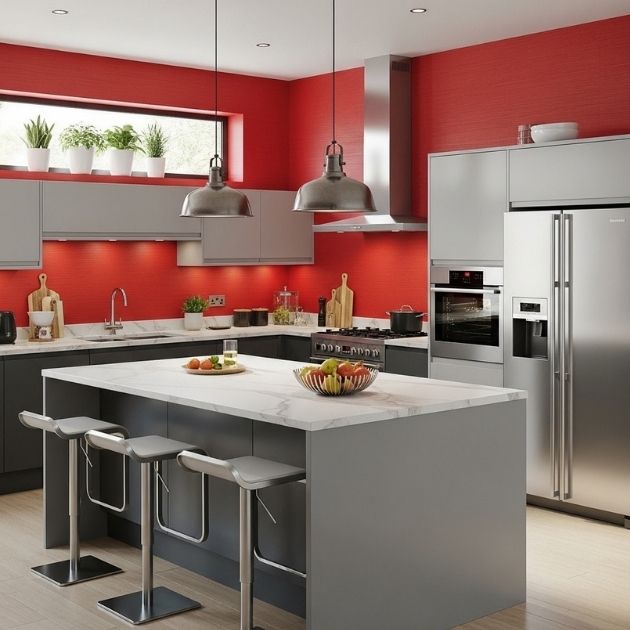
Red walls and gray cabinets might seem like a risky pairing, but in the right shade, it’s one of the most personality-driven combinations you can choose. The cool neutrality of gray gently reins in the boldness of red, creating a space that feels vibrant and energetic without being overwhelming.
The key word here is muted. Avoid fire-engine red instead, reach for:
- Terracotta warm, earthy, and perfect for rustic or Mediterranean-inspired kitchens
- Brick red grounded and cozy, works beautifully with farmhouse-style gray shaker cabinets
- Burgundy deep and sophisticated, ideal for traditional or transitional kitchen designs
This combination works especially well when the gray cabinets have cool undertones, as the warm red wall creates a natural tonal balance. Add natural wood accents, woven textures, or black iron hardware to complete the look.
Warm vs. Cool Tones: Which Works Best with Gray Kitchen Cabinets?
This is the question at the heart of every gray cabinet wall color decision and the answer starts with understanding your cabinets’ undertones.
Gray is never just gray. Every shade has a subtle undertone that pulls it toward warm or cool territory. Here’s how to identify yours:
- Warm gray cabinets have brown, beige, or golden undertones. They often look taupe-ish in natural light.
- Cool gray cabinets have blue, green, or purple undertones. They tend to look crisp and clean.
Hold a white piece of paper next to your cabinet door this instantly reveals whether the gray is reading warm or cool.
Wall Color Guide by Cabinet Undertone
Warm-toned gray cabinets pair best with:
- Cream or off-white walls
- Warm white (Benjamin Moore “Chantilly Lace”)
- Terracotta or muted red
- Sage green
Cool-toned gray cabinets pair best with:
- Crisp white (Sherwin-Williams “Extra White”)
- Navy blue
- Soft blue-gray
- Black or charcoal
Lighting matters too. In south-facing kitchens with abundant warm sunlight, cool gray cabinets can appear softer and may work with a broader range of wall colors. In north-facing kitchens with cooler light, warm wall tones help balance any chilliness from the space.
The bottom line: match undertone to undertone for harmony, or intentionally contrast them for drama. Both approaches work you just need to do it deliberately, not accidentally.
Real-Life Examples: Stunning Gray Kitchen Designs
Theory is one thing. Seeing these combinations in real kitchens brings them to life. Here are five popular design styles and how they handle the gray cabinet + wall color equation.
Modern Minimalist
The look: Flat-front gray cabinets in medium slate gray, paired with warm white walls and a slab marble backsplash. Hardware is matte black, countertops are white quartz. Clean lines everywhere.
Why it works: The restrained color palette keeps the focus on materials and form. The warm white wall prevents the space from feeling sterile while maintaining a gallery-like calm.
Rustic Farmhouse
The look: Greige shaker cabinets with a warm taupe undertone. Walls are painted a soft brick red or warm terracotta. Open wood shelving, aged brass hardware, and a farmhouse sink complete the picture.
Why it works: The earthy wall color echoes the warm undertones in the cabinet finish, creating a cohesive, grounded palette that feels authentically cozy rather than designed.
Scandinavian Calm
The look: Pale dove gray flat-panel cabinets, white walls, light oak flooring, and minimal décor. Perhaps a single potted plant and simple woven pendant lights.
Why it works: The near-white wall keeps the space luminous and open core to Scandinavian design philosophy. The soft gray cabinets add depth without sacrificing the brightness that makes this style so livable.
Organic Modern
The look: Matte charcoal gray lower cabinets paired with muted sage green walls. Natural stone countertops, bronze fixtures, and rattan pendant lights layer in organic texture.
Why it works: Sage green and charcoal gray share an earthy, muted quality that makes them natural companions. The wall color introduces color without competing with the cabinets, while the natural materials soften what could otherwise be a stark palette.
Classic Elegance
The look: Deep blue-gray cabinets with inset doors and brass hardware. Walls are painted a warm cream or soft taupe. Crown molding, marble countertops, and polished brass fixtures complete the refined look.
Why it works: The warmth of the cream walls balances the depth of the blue-gray cabinets, while brass hardware ties warm and cool tones together. This is timeless cabinetry at its best equal parts restrained and luxurious.
Conclusion
Choosing the right wall color for gray kitchen cabinets comes down to three things: your cabinet’s undertone, your kitchen’s light conditions, and the mood you want to set. White and cream are the most versatile and foolproof options. Navy, black, and muted red deliver bolder, more character-driven results. And a monochromatic gray scheme offers effortless, sophisticated calm.
The most important step? Test before you commit. Paint large swatches directly on your kitchen wall and observe them at different times of day morning light, midday, and evening under artificial lighting will all tell you something different. Your gray cabinets have already done most of the heavy lifting. The right wall color simply brings out their best.

